What Is AI Slop and How to Use AI in Your Business Without It
AI slop is low-effort AI output that customers can spot instantly. What it looks like in a business, why it hurts trust and search, and six rules for using AI without it.
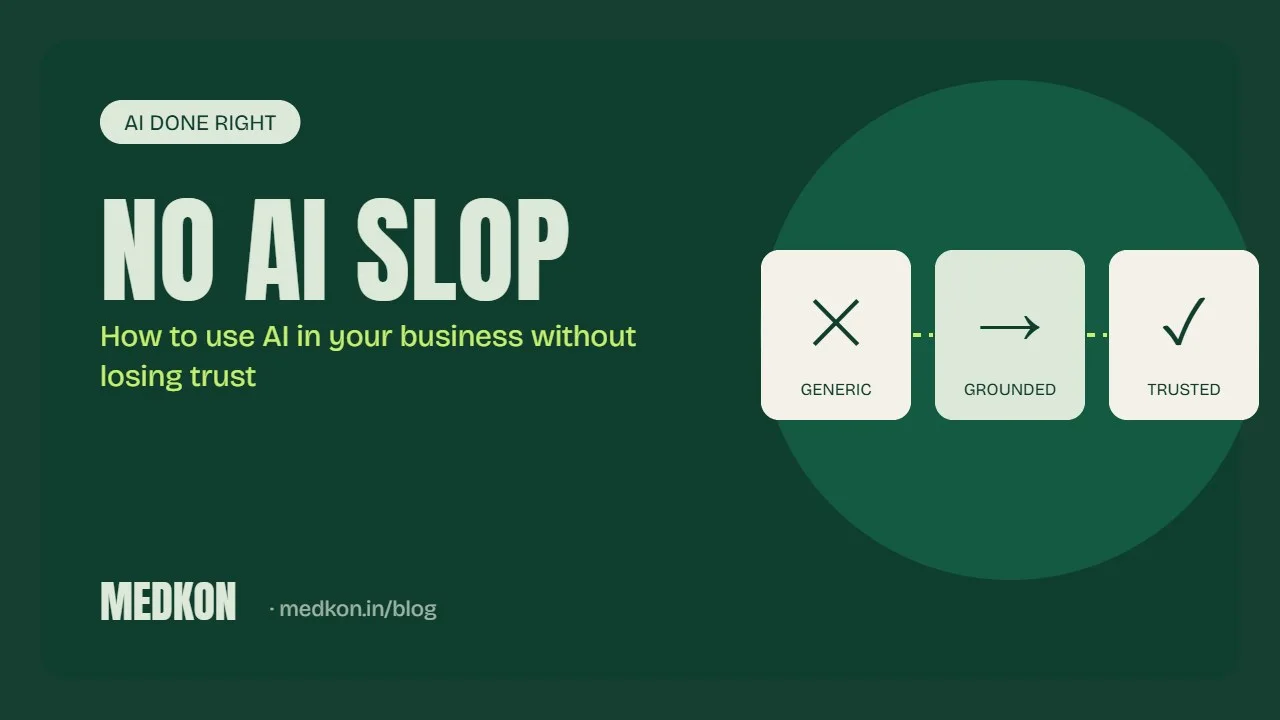
"AI slop" is the name people now use for low-effort AI output: generic blog posts that say nothing, chatbots that answer confidently and wrongly, stock-looking AI images and automated messages that sound like nobody wrote them. It is everywhere, and customers have learned to spot it. For a business, AI slop is worse than doing nothing, because it tells customers you do not care enough to get it right.
What AI slop looks like in a business
- A website chatbot that invents a price, a policy or a delivery date.
- Blog posts stuffed with keywords and phrases like "in today's fast-paced digital landscape", with no real information.
- WhatsApp broadcasts that address the customer by the wrong name or answer a question they did not ask.
- Product descriptions that are long, vague and identical in tone to every competitor.
- AI images with odd hands, fake text and faces that do not belong to your team.
Why it hurts you
- Trust. One wrong answer from a bot can lose a customer who would have bought.
- Search. Search engines aim to reward helpful, original content and demote pages made mainly to rank. Thin AI content rarely earns links, mentions or repeat visits.
- AI answers. Tools like ChatGPT and Google AI Overviews cite sources that contain specific, verifiable information. Generic text gives them nothing to quote.
- Brand. If your content sounds like everyone else's, price becomes the only difference.
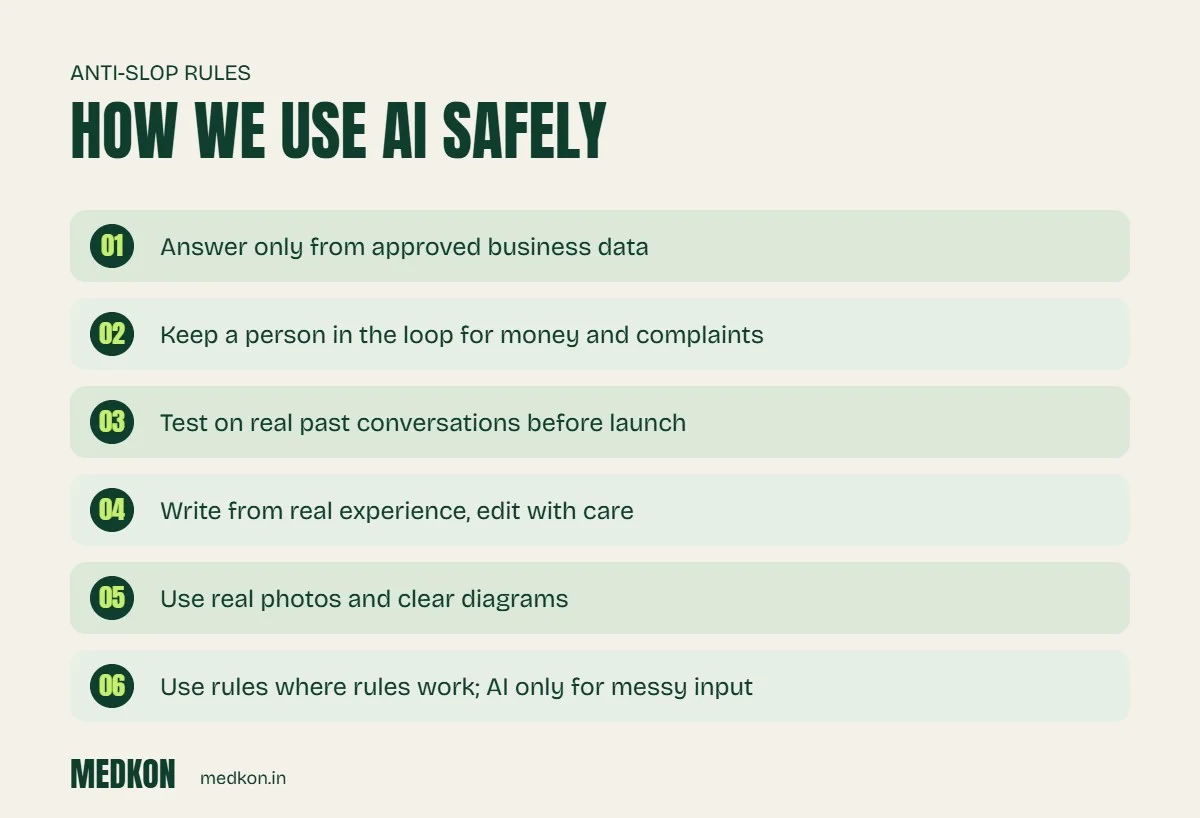
How we use AI without slop
1. Ground every answer in your own data
Our AI agents answer only from documents you approve: services, prices, policies, past FAQs. If the answer is not there, the agent says a person will confirm.
2. Keep a person in the loop
Anything involving money, health, legal matters or complaints goes to a person. AI drafts; people decide.
3. Test against real conversations
Before launch we run the agent on real past enquiries and fix every vague or wrong reply.
4. Write with experience, edit with care
Content starts from what we have actually built and seen. AI can help with outlines and editing, but every published page is checked by a person who knows the subject, with specific examples, prices and steps.
5. Use real images
Real team photos, real office photos, real screenshots of work, and clear diagrams instead of generated people.
6. Use AI only where it helps
If a simple rule can do the job, we use the rule. AI is for messy input like free-text messages and documents, not for everything.
A quick anti-slop checklist
- Would a customer learn something specific from this page or reply?
- Is every price, date and promise true and approved?
- Does it sound like your business, not like a template?
- Is there an easy way to reach a person?
- Would you be happy to put your name on it?
That is the standard we build to. See our AI automation service, or read about how a WhatsApp AI agent works.
Frequently asked questions
What does AI slop mean?
Low-effort AI-generated content or replies that are generic, inaccurate or obviously machine-made, such as filler blog posts, wrong chatbot answers or odd AI images.
Does Google penalise AI content?
Google says it rewards helpful content however it is made, and targets content made mainly to manipulate rankings. Thin, generic AI pages rarely perform well.
How do I stop my chatbot from making things up?
Limit it to approved documents, make it say when it is unsure, hand over to a person and test it on real past questions before launch.
Should I use AI to write my website content?
It can help with outlines and editing, but the substance should come from your real experience, and a person who knows the subject should check every page.