WhatsApp Opt-in and Consent Wording for Indian Businesses (DPDP-Ready Templates)
How to collect WhatsApp opt-in properly in India, with copy-paste consent wording for websites, forms, QR codes and chats, plus how to record consent and handle opt-outs.
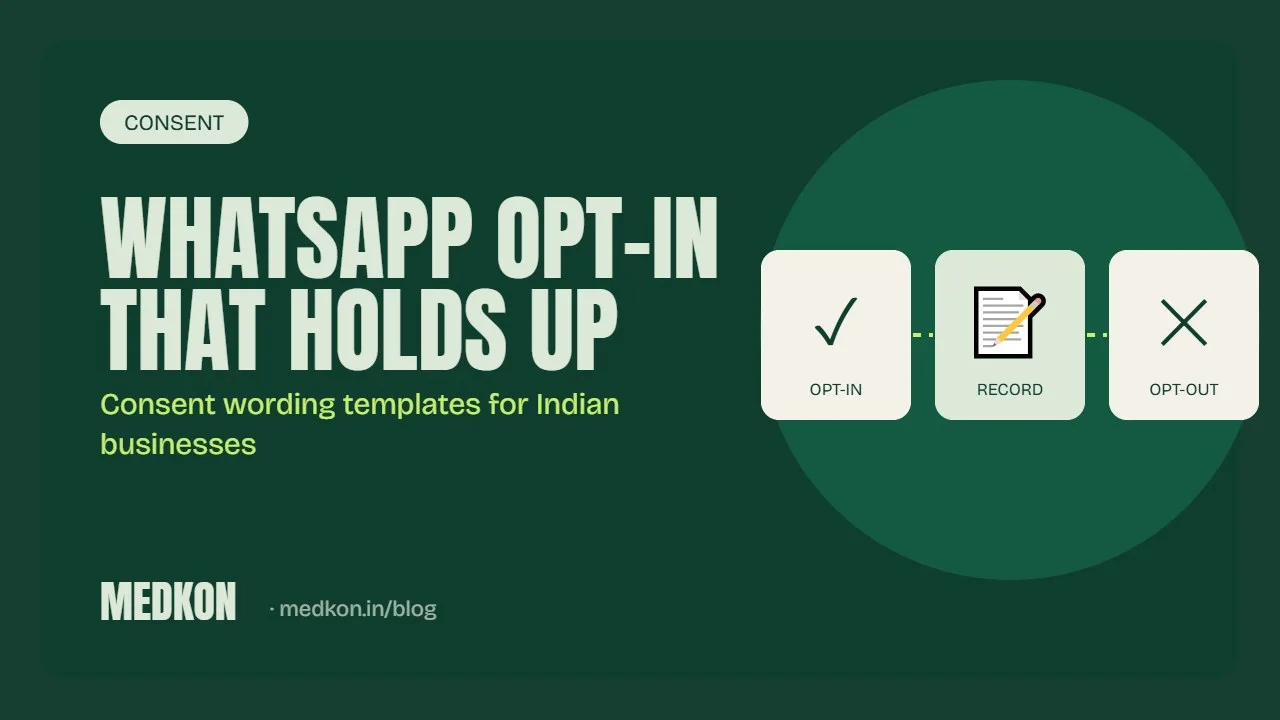
Meta requires businesses to get opt-in before sending WhatsApp messages through the Business API, and India's DPDP Act will require clear, specific consent for personal data. Good consent is also good business: people who agreed to hear from you read your messages, and fewer people block or report your number, which protects your quality rating.
Below are templates you can adapt. They are practical examples, not legal advice.
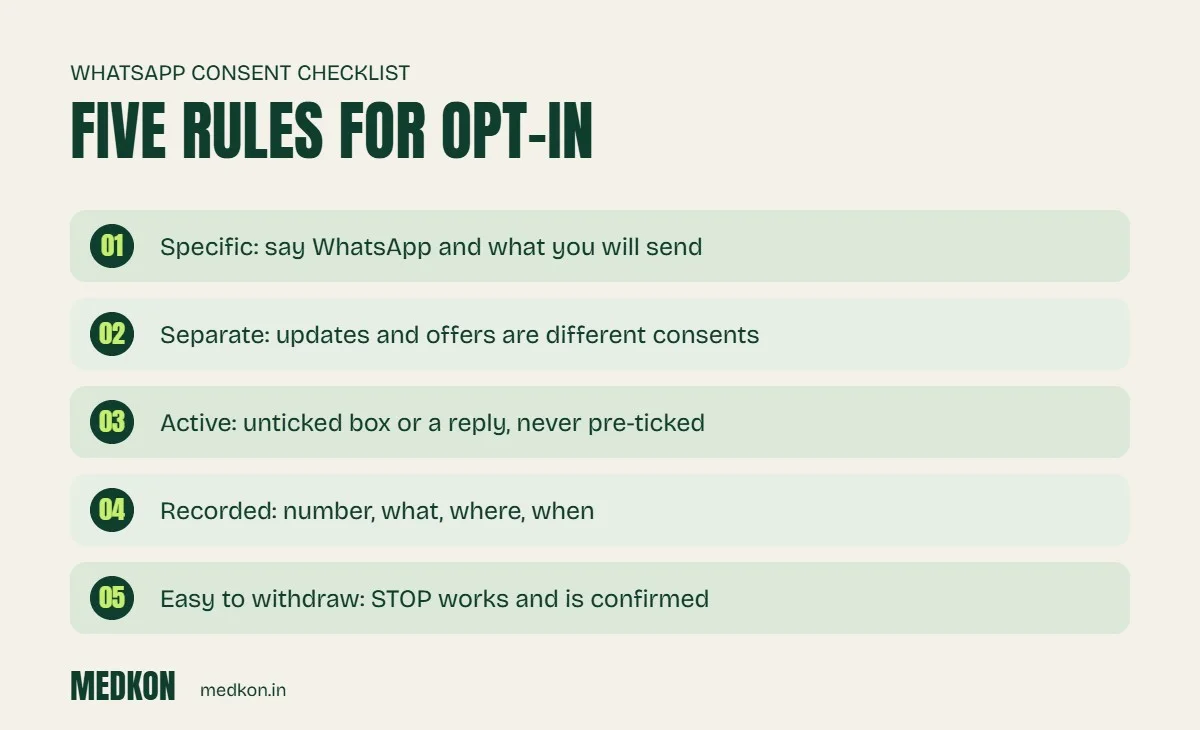
What good consent looks like
- Specific: say it is WhatsApp, and what you will send (booking updates, offers, or both).
- Separate: keep promotional consent separate from transactional updates. A patient may want reminders but not offers.
- Active: an unticked checkbox or a message the person sends, not a pre-ticked box.
- Recorded: store when and where the person opted in.
- Easy to withdraw: a "Reply STOP" or similar that actually works.
Copy-paste wording
Website or booking form
☐ Send me appointment updates and reminders on WhatsApp.
☐ Send me occasional offers and news on WhatsApp. I can stop anytime by replying STOP.
Click-to-WhatsApp ad or QR code at the counter
Thanks for messaging [Business]. We will use WhatsApp to reply to you and send updates about your booking. Want occasional offers too? Reply YES. You can reply STOP anytime.
Hindi version
[Business] se WhatsApp par booking updates aur reminders paane ke liye YES likhein. Offers band karne ke liye kabhi bhi STOP likhein.
For parents (coaching institutes)
I am the parent or guardian of [student name] and agree to receive class schedules, fee reminders and test updates from [Institute] on WhatsApp.
How to record consent
Save the phone number, what they agreed to (updates, offers), where (form, QR, chat), and the date and time, in your CRM or a sheet. Automations should check this before sending any promotional message.
Handling opt-outs
When someone replies STOP, remove them from promotional lists automatically and confirm in one message. Keep sending only the transactional messages they still need, such as a booking confirmation they requested.
DPDP timing
Most DPDP Act duties for businesses, including notice and consent rules, start on 13 May 2027. Setting up clean opt-in now is easier than fixing a messy list later. Read what changes on 13 November 2026.
We build opt-in, consent records and opt-out handling into every WhatsApp automation.
Frequently asked questions
Do I need consent to send WhatsApp messages to customers in India?
Yes. Meta requires opt-in for WhatsApp Business API messages, and the DPDP Act requires clear consent for processing personal data, with most duties applying from 13 May 2027.
Can I use a pre-ticked checkbox for WhatsApp opt-in?
No. Consent should be an active choice, such as ticking an empty box or replying YES.
Should offers and reminders have separate consent?
Yes. Many customers want booking updates but not promotions, so ask separately and respect each choice.
How do I handle STOP replies?
Remove the number from promotional lists automatically, confirm once, and keep only the transactional messages the person still needs.