Invoice and Document Processing with AI for Indian SMEs
How Indian SMEs use AI to read invoices, purchase orders and delivery notes into Sheets, Odoo or Tally imports, with a human review step, GST fields to capture and realistic costs.
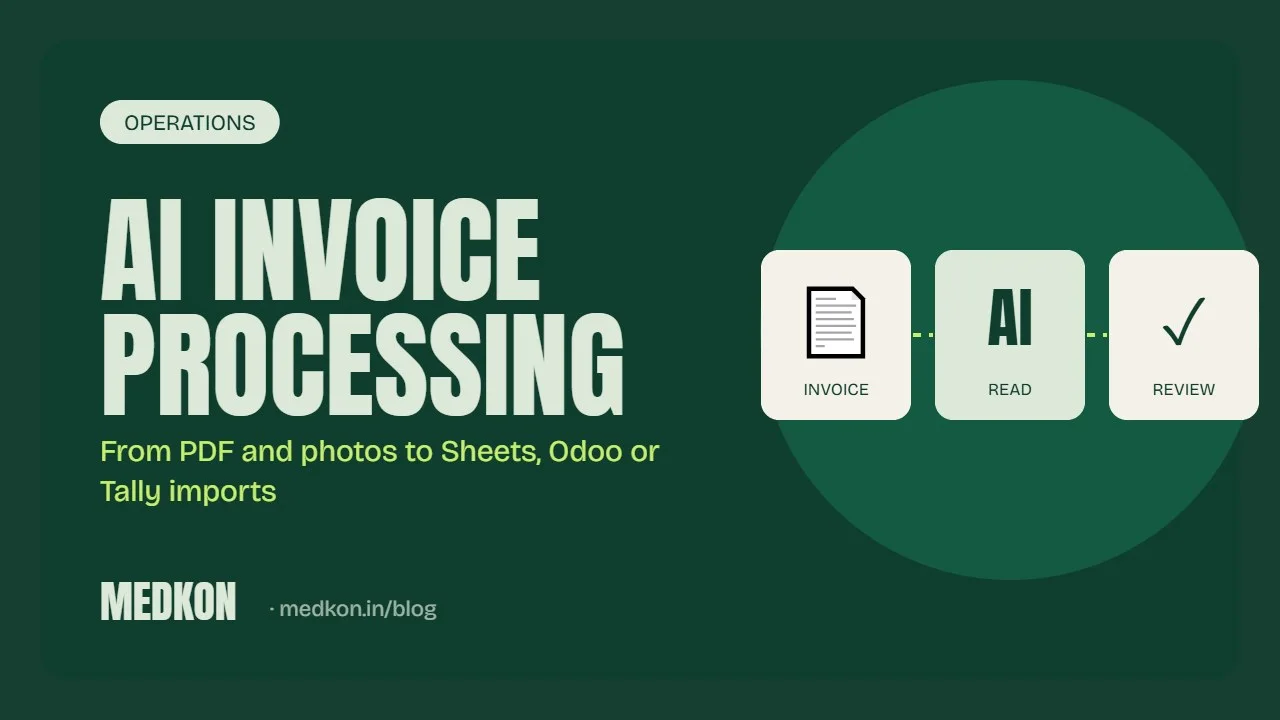
Many Indian SMEs still type invoices, purchase orders and delivery notes into a sheet or accounting software by hand. It is slow, error-prone and usually done late at night. AI can now read these documents, even phone photos and scanned PDFs, extract the fields you need and prepare them for your accounts, with a person checking anything uncertain.
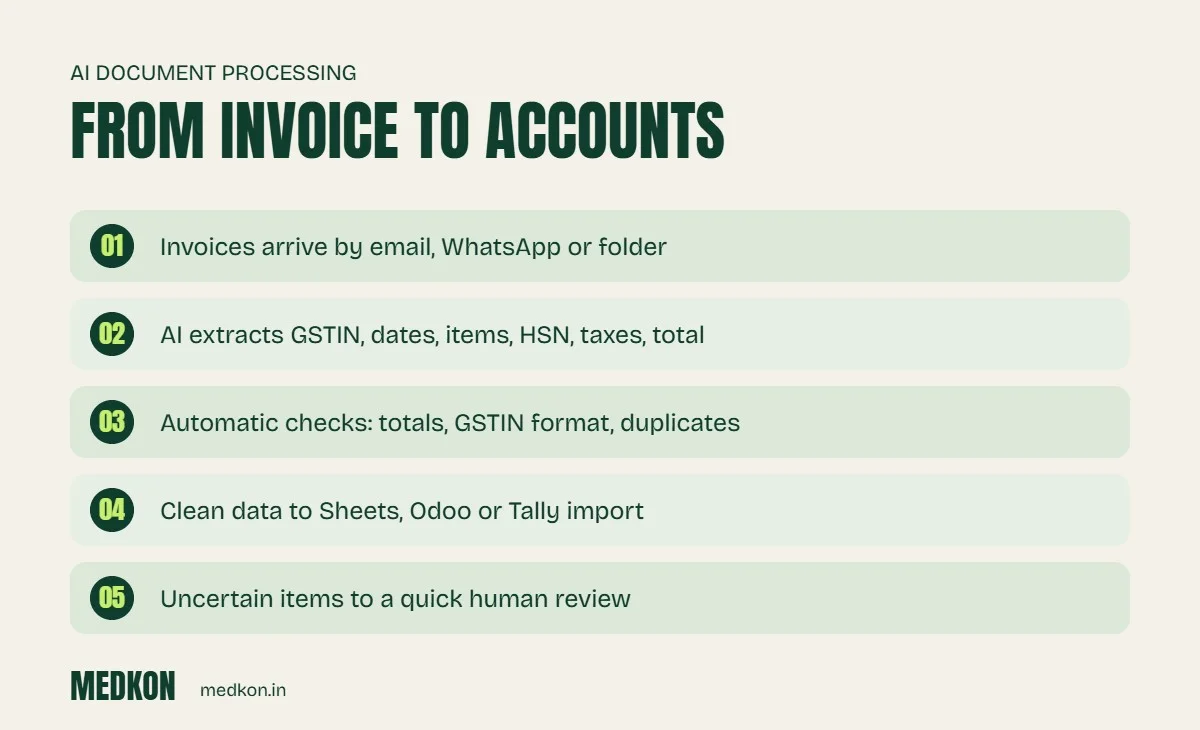
How it works
- Documents arrive by email, WhatsApp or a shared folder.
- AI reads each one and extracts the fields: supplier name and GSTIN, invoice number and date, line items, HSN codes, taxable value, CGST/SGST/IGST and total.
- Simple checks run automatically: do line items add up to the total, is the GSTIN format valid, is this a duplicate invoice number?
- Clean documents go to Google Sheets, Odoo or a Tally import file. Anything uncertain goes to a review queue.
- A person approves the review queue in minutes instead of typing everything.
Getting accuracy right
- Start with your top ten suppliers' formats and test on a few months of real invoices.
- Never post directly to final accounts without review at first; measure the error rate before reducing checks.
- Keep the original file linked to every record for audits.
Beyond invoices
The same approach works for purchase orders, delivery challans, bank statements, resumes and KYC documents. For sensitive documents, limit who can see them and avoid sending more data to the AI than needed.
Cost
Document processing projects usually cost ₹30,000 to ₹80,000 to build, depending on the number of document types and where the data goes. Running costs are small per document. See business automation and pricing.
Frequently asked questions
Can AI read GST invoices?
Yes. AI can extract supplier details, GSTIN, invoice number, line items, HSN codes and tax amounts from PDFs and photos, with checks for totals and duplicates.
Can invoice data go into Tally automatically?
It can be prepared as a Tally import file or sent to Odoo or Sheets. We recommend a human review step before posting.
How accurate is AI invoice processing?
It depends on document quality and formats. Test on real invoices, keep a review queue and measure the error rate before reducing checks.
How much does AI invoice automation cost?
Usually ₹30,000 to ₹80,000 to build, depending on document types and destinations, with small per-document running costs.