Is Your WhatsApp Chatbot Allowed? Meta’s AI Chatbot Rules for Indian Businesses (2026)
Meta does not allow general-purpose AI assistants on the WhatsApp Business API, but task-specific business bots for support, booking and sales are allowed. Examples, grey areas and how to stay safe.
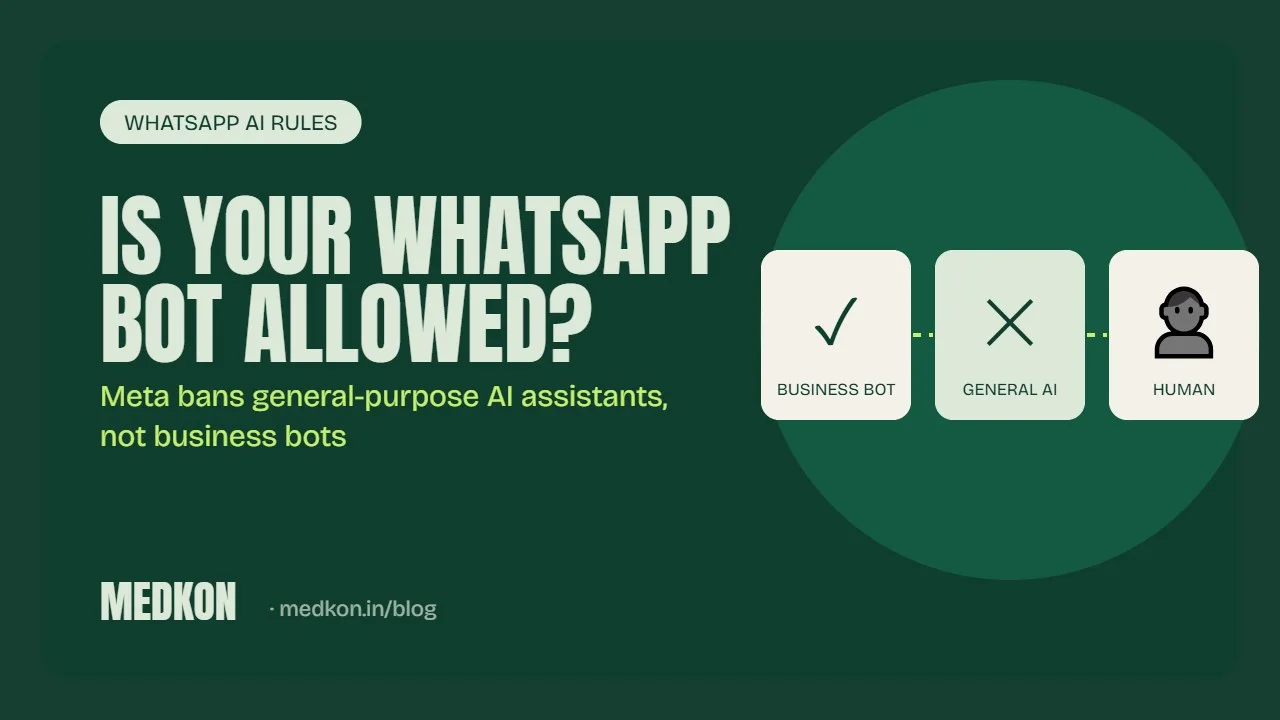
Short answer: if your WhatsApp bot helps customers with your business, such as answering questions about your services, booking appointments, sharing order status or qualifying leads, it is allowed. What Meta does not allow on the WhatsApp Business API is a general-purpose AI assistant, where the AI chatbot itself is the product, like an open-ended "ask me anything" bot.
Meta added this rule to its WhatsApp Business Solution Terms in late 2025. It applied to new accounts from 15 October 2025 and to all accounts from 15 January 2026. Many Indian businesses are now unsure whether their AI chatbot is at risk. This guide explains the line, with examples, so you can check your own setup. It is a practical summary, not legal advice; read Meta's current terms or ask your WhatsApp provider for confirmation.
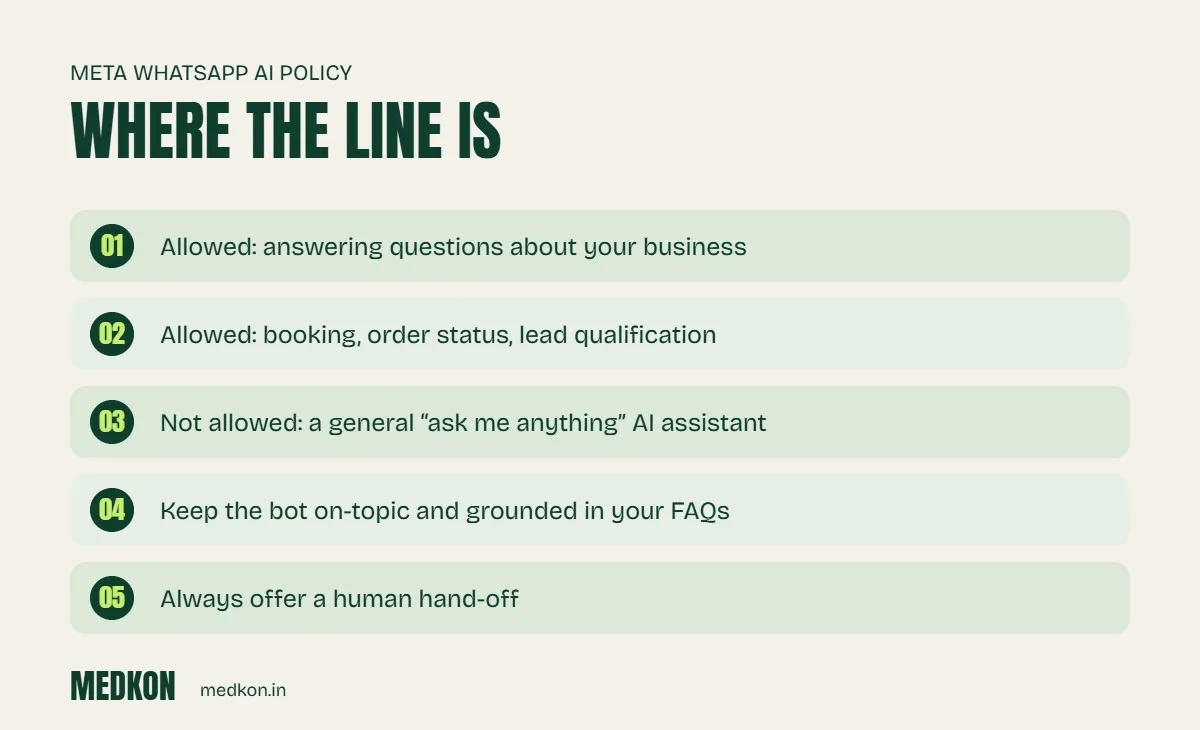
Allowed: task-specific business bots
- A clinic assistant that answers timings and fees and books appointments.
- A coaching institute bot that shares batch details and books demo classes.
- A D2C store bot that tracks orders, handles returns and recommends products from its own catalogue.
- A real estate bot that shares project details and books site visits.
- Any bot that uses AI to understand messages and reply, as long as it serves your business's customers.
Not allowed: general-purpose AI assistants
- A bot whose main purpose is to offer a general AI chatbot to anyone, answering any question on any topic.
- Reselling access to an AI model through a WhatsApp number.
Grey areas and how to stay safe
- Keep the bot on-topic. If someone asks a clinic bot about cricket scores, it should politely bring the chat back to the clinic.
- Ground answers in your own information. A bot that only answers from your approved FAQs, prices and policies is clearly business-specific. It is also less likely to invent facts.
- Always offer a human. Customers should be able to reach a person at any time.
- Follow the usual messaging rules. Opt-in for promotions, correct template categories and no spam. These matter as much as the AI rule.
- Be honest that it is an assistant. Customers trust a bot that is clear about what it is.
What it costs to run
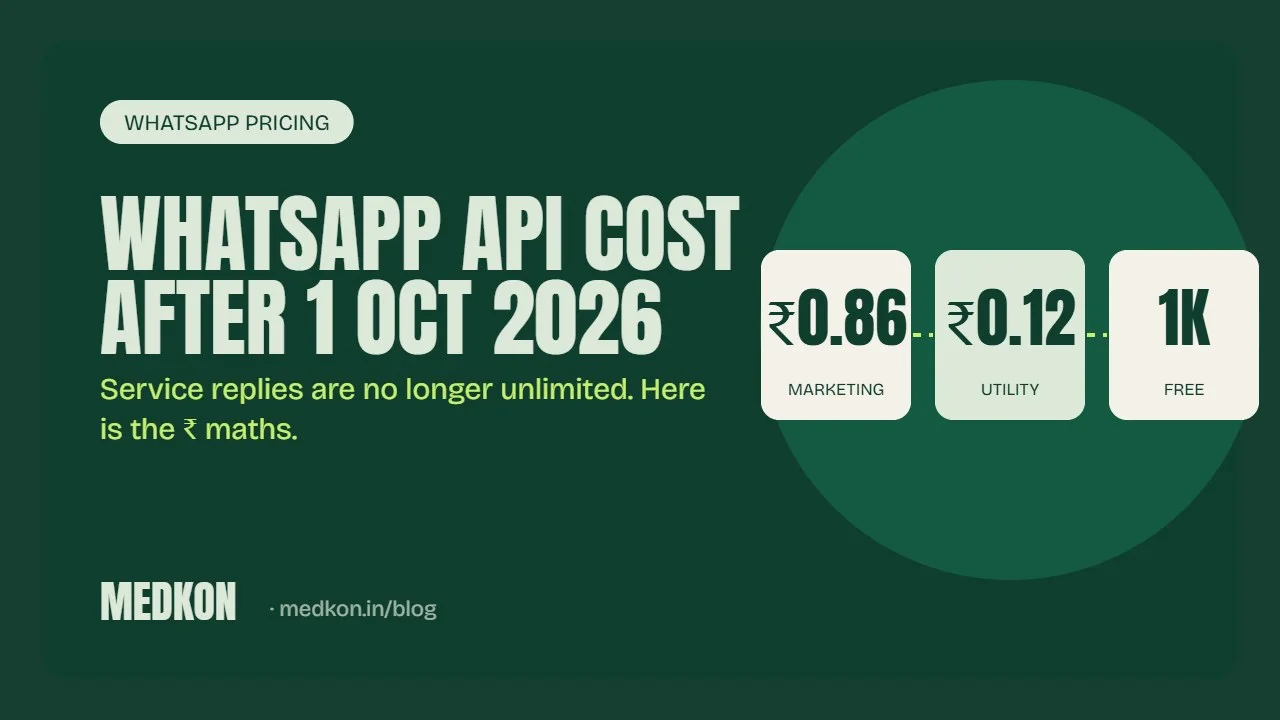
A business bot on the API pays Meta's normal per-message charges. Since 1 October 2026 that includes service replies after the first 1,000 per number per month. See our WhatsApp API cost guide for ₹ examples.
How we build compliant WhatsApp AI agents
Every WhatsApp AI agent we build has one clear business job, answers only from approved information, stays on-topic, logs its actions and hands over to a person. That keeps it inside Meta's rules and avoids "AI slop".
Frequently asked questions
Can I use an AI chatbot on WhatsApp Business API?
Yes, if it serves your business, for example answering questions about your services, booking appointments or tracking orders. General-purpose AI assistants are not allowed.
When did Meta ban general-purpose AI chatbots on WhatsApp?
The rule applied to new WhatsApp Business accounts from 15 October 2025 and to all accounts from 15 January 2026.
Will my WhatsApp number be banned for using AI?
Not for a business-specific bot that follows Meta's messaging policies. Numbers are more often restricted for spam, missing opt-in or low-quality templates.
Does an AI WhatsApp bot cost extra?
It pays Meta's normal per-message charges like any other API message, plus your provider fee and the AI model's usage cost.